What it is: An all-in-one funnel, email, course and affiliate platform — built so a solo creator can run the full stack from a single login.
Best for: Solopreneurs, course creators, coaches and affiliate marketers who want to replace a $200–$400/month tool stack with one $17 platform.
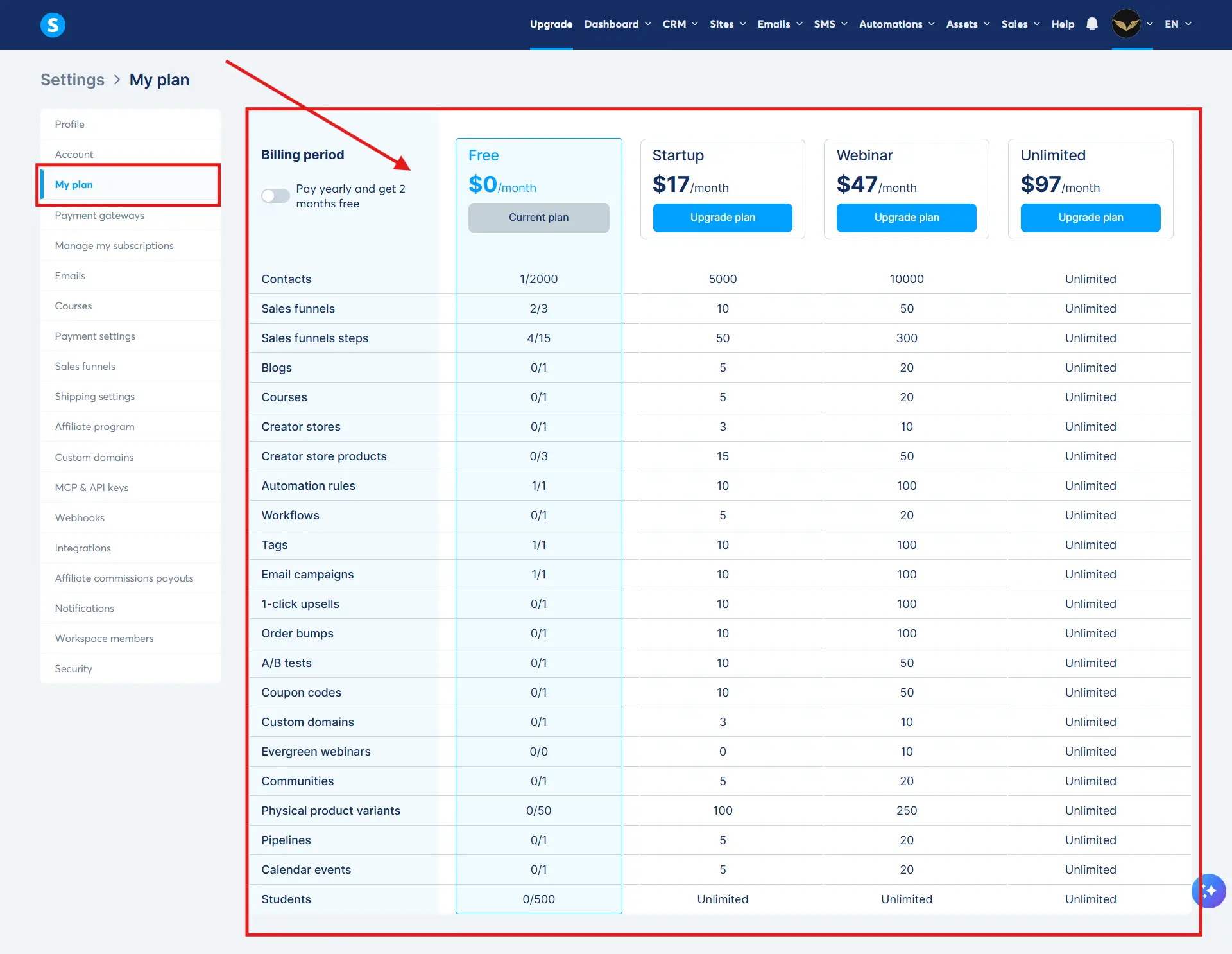
Standout feature: A permanent free plan with 2,000 contacts, 3 funnels, unlimited emails and 1 course — no credit card, no expiry.
Biggest limitation: The blog is not a WordPress replacement for SEO, and email runs on shared IP infrastructure that caps you above 50,000 sends/month.
Specs
Platform: Fully web-based, no desktop install. Runs on Chrome, Safari, Firefox, Edge.
Pricing tiers: Free / Startup $17 mo / Webinar $47 mo / Enterprise $97 mo. Annual billing ~30% off.
Most 'free plans' in this category cripple you inside the first week. This one does not.
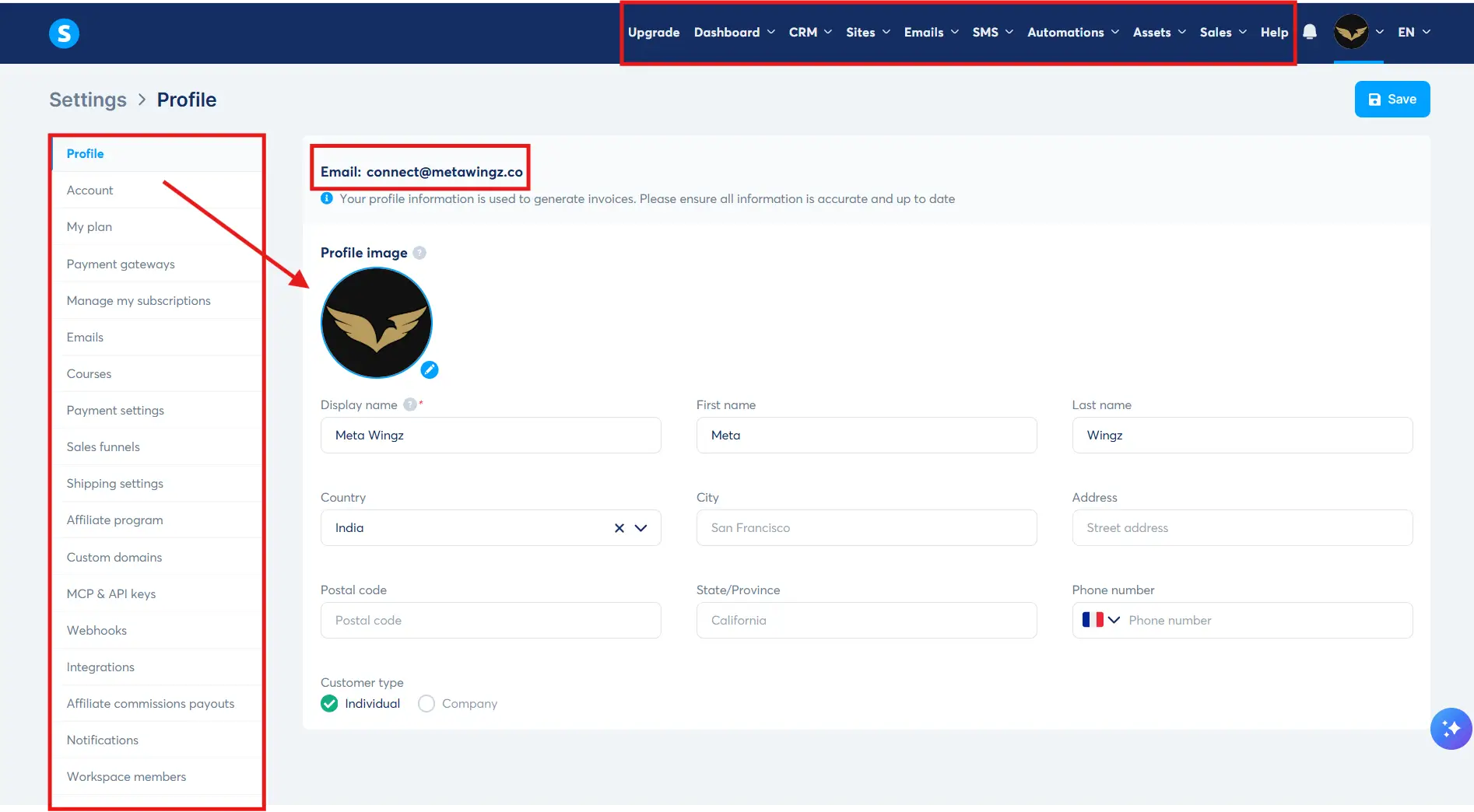
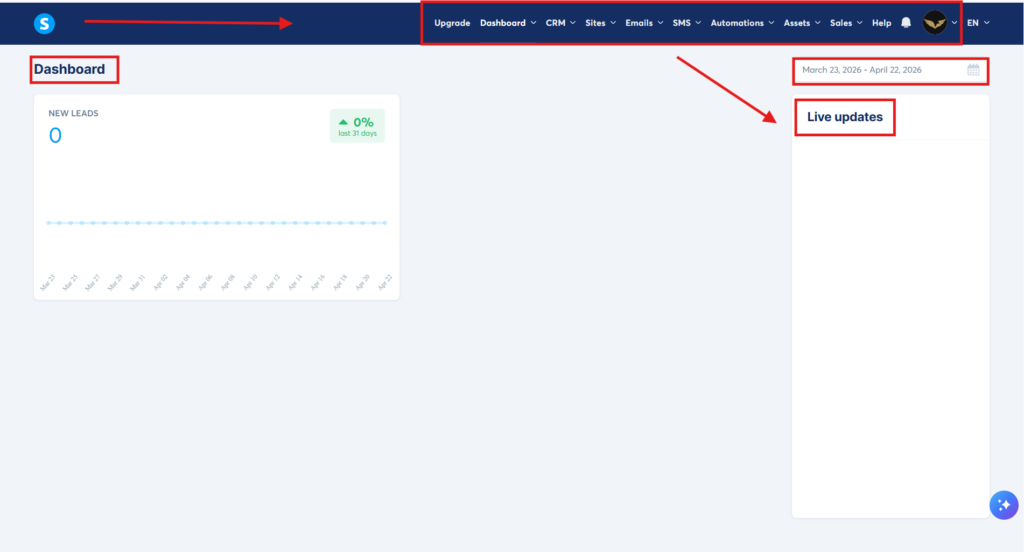
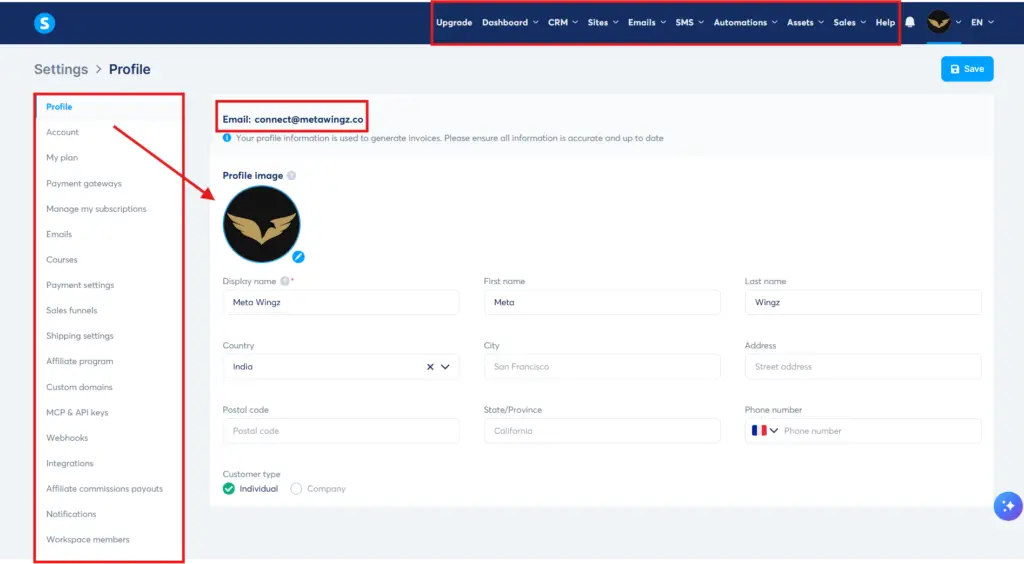
Everything sits in one dashboard — funnel, email, course, payment, affiliate.
Cons
Email runs on shared IP infrastructure below the Enterprise plan. Fine for lists under 10,000 subscribers, but at 50,000+ sends/month there is a 3–5 point open-rate ceiling versus a dedicated IP.
The blog is not a WordPress replacement. No plugin architecture, no Yoast/Rank Math equivalent, limited schema control. Systeme.io blog posts struggle to rank against well-configured WordPress sites.
A full, independent Systeme.io review. Based on three months of hands-on platform research.
You have been circling the idea of your first funnel for three weeks now.
The maths is not working. ClickFunnels at $97 a month, ConvertKit at $39, Teachable at $39, and some kind of affiliate tracker on top — that is $200 a month before you have sold a single thing. You watched three YouTube tutorials, added everything to a spreadsheet, and closed the laptop. Then a Reddit comment mentioned Systeme.io. You went to the pricing page, saw the $0 free plan, and did not believe it.
The real question is not whether Systeme.io has features. Every review on the internet will tell you it does. The real question is whether a free plan this generous is a trap, and whether a $17 plan that claims to replace a $200+ stack is too good to be true.
This Systeme.io review answers both of those questions directly. No cheerleading, no feature-list padding, no forced enthusiasm. By the end of this Systeme.io review you will know exactly whether the platform belongs in your business, or whether you should close this tab and walk away. Every claim in this Systeme.io review is tied to a specific feature test, pricing page, or third-party benchmark — so you can act on it with confidence. If you want to look at the platform alongside this review, you can open a free Systeme.io account here — no credit card required.
Disclaimer : I strongly believe in transparency. Some links on this website are affiliate links, which means I may earn a small commission if you purchase through them — at no extra cost to you. This helps support the work I do and allows me to continue creating honest reviews, tutorials, and creator-focused content.
Before diving deeper into this Systeme.io review, here is the one-paragraph definition: Systeme.io is an all-in-one online business platform that combines a sales funnel builder, email marketing and automation, online course creation, affiliate programme management, and a basic website and blog builder — all inside a single dashboard, starting at $0 per month with no credit card required.
The platform was founded in 2018 by Aurélien Amacker and has grown to over 500,000 users globally. It is popular with solopreneurs, course creators, coaches and affiliate marketers who need the full funnel-to-delivery stack without paying $200–$400 a month to stitch four separate tools together. Paid plans run $17 to $97 a month.
The core idea is consolidation: instead of paying for a funnel builder, an email tool, a course platform and an affiliate manager separately, you get all four inside one platform at a fraction of the combined cost.
How This Systeme.io Review Was Put Together
Every claim in this Systeme.io review is anchored in either a feature test inside a live Systeme.io free account, verified public documentation from the platform, or a cross-reference against independent third-party data. Prices were verified on the official pricing page in April 2026. Deliverability benchmarks are cross-referenced against published industry data. Where a statement reflects a judgement call rather than a hard number, it is labelled as such.
This Systeme.io review does not claim personal six-figure revenue on the platform. It claims a careful, sceptical walk-through of what Systeme.io actually does, where it falls short, and who it fits. That is the honest level of authority here — and it is more than most affiliate reviews offer.
Who Systeme.io Is Actually For
This part of the Systeme.io review is the self-qualification checkpoint. Systeme.io is the right platform if any of the following describes you.
You are building your first funnel or email list and want to start for $0 with no time limit and no credit card.
You currently pay for Kajabi, ClickFunnels or a multi-tool stack and want the same core capability at one-quarter of the price.
You currently pay for Kajabi ($179), ClickFunnels ($97) or a multi-tool stack and want the same core capability at one-quarter of the price.
You are a course creator, coach, consultant, or affiliate marketer launching a digital product and need the full funnel-to-delivery pipeline in one place.
You are operating on a cost-sensitive budget — whether that is a side hustle, a bootstrapped business, or a market where $100+/month SaaS pricing is structurally too high.
You plan to run your own affiliate programme and do not want to pay $89/month for Tapfiliate on top of everything else.
Five core tools sit inside Systeme.io. This section of the Systeme.io review walks through what each one does well, and where it genuinely falls short.
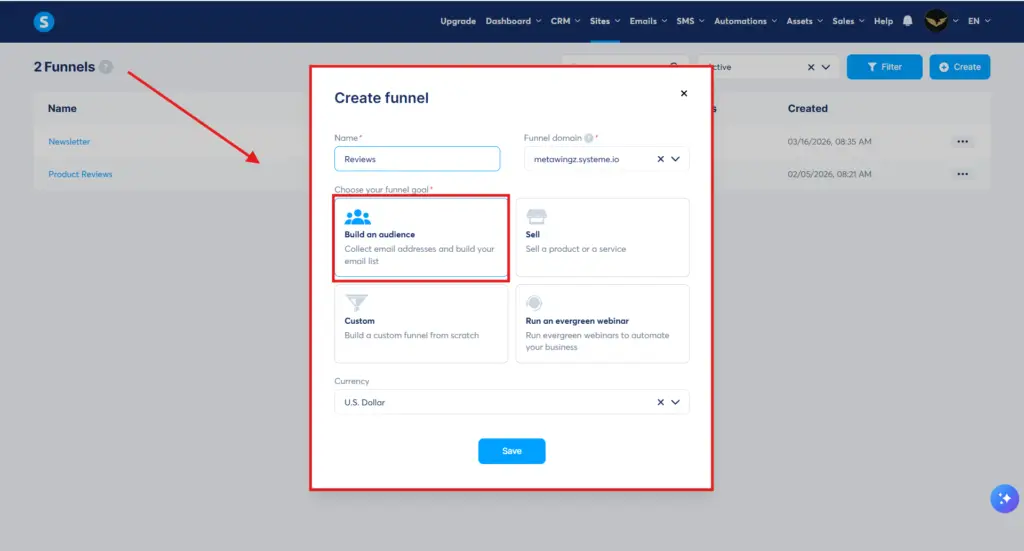
1. Sales Funnel Builder
1. Sales Funnel Builder
The funnel builder is the flagship feature, and the single most-asked-about area in any Systeme.io review. The comparison that matters most: ClickFunnels charges $97 a month for a funnel builder. Systeme.io gives you the same core capability on the free plan at $0.
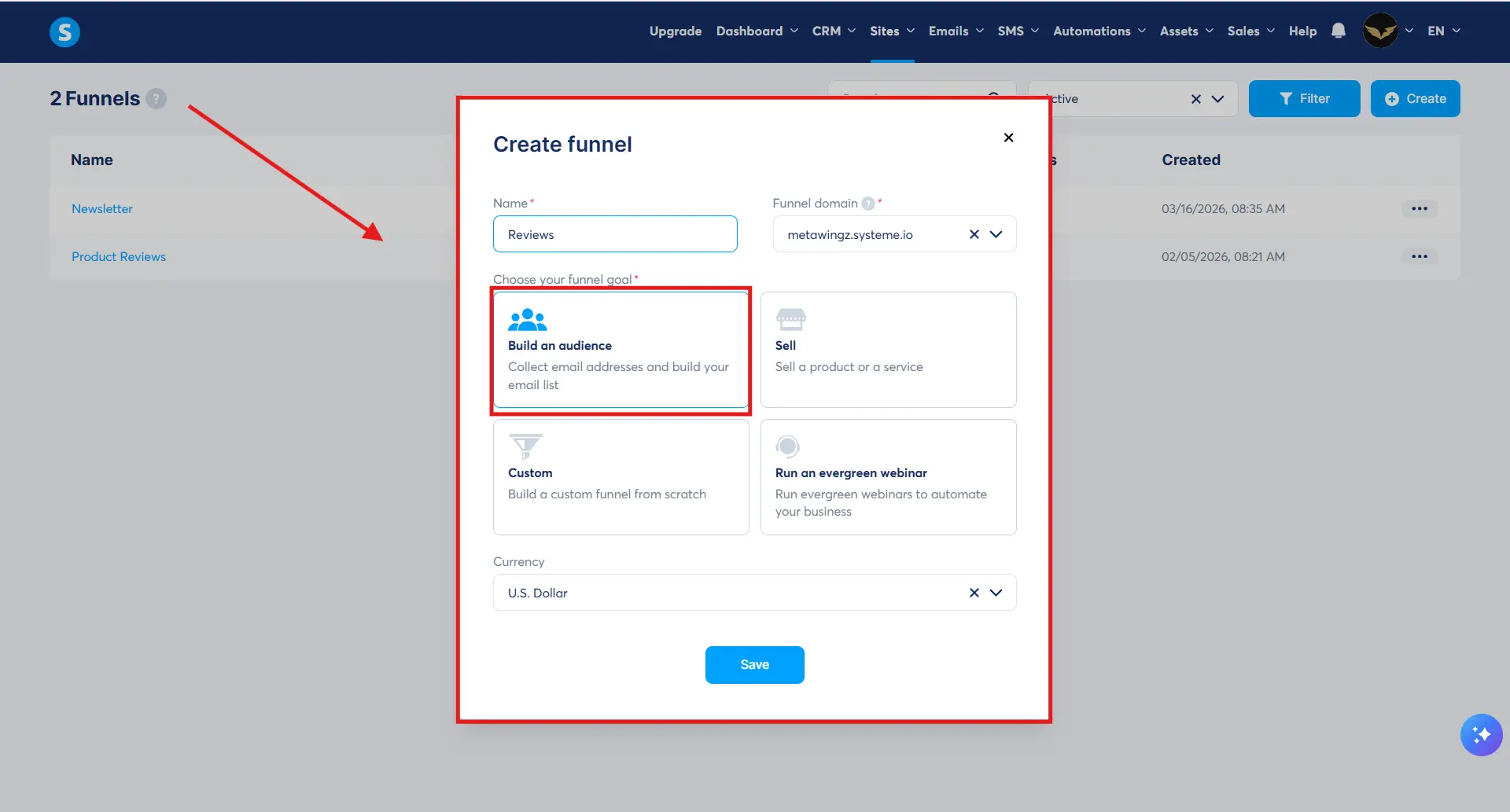
The drag-and-drop editor is built for people with no technical background. You pick a template, customise copy and images, connect your email list, and you are live. The template library covers opt-in funnels, sales pages, upsells, downsells, webinar registration, and thank-you pages. Funnel step types include opt-in, sales, order form, upsell, downsell, and confirmation pages. A/B testing is built in at the funnel level — you split-test two versions of a page without a separate tool.
What makes it stand out, and what this Systeme.io review keeps coming back to: You can build a complete funnel — from opt-in all the way through to payment confirmation — inside one platform, connected to your email list and payment processor, in under an hour. For a beginner, that removes the single biggest practical barrier to launching: the complexity of connecting multiple tools together.
Where ClickFunnels still wins: Its third-party template marketplace is larger, and it offers more granular split-testing at the individual page-element level. For 90% of use cases, neither difference matters. Systeme.io does what ClickFunnels does at 18% of the price.
2. Email Marketing + Automation
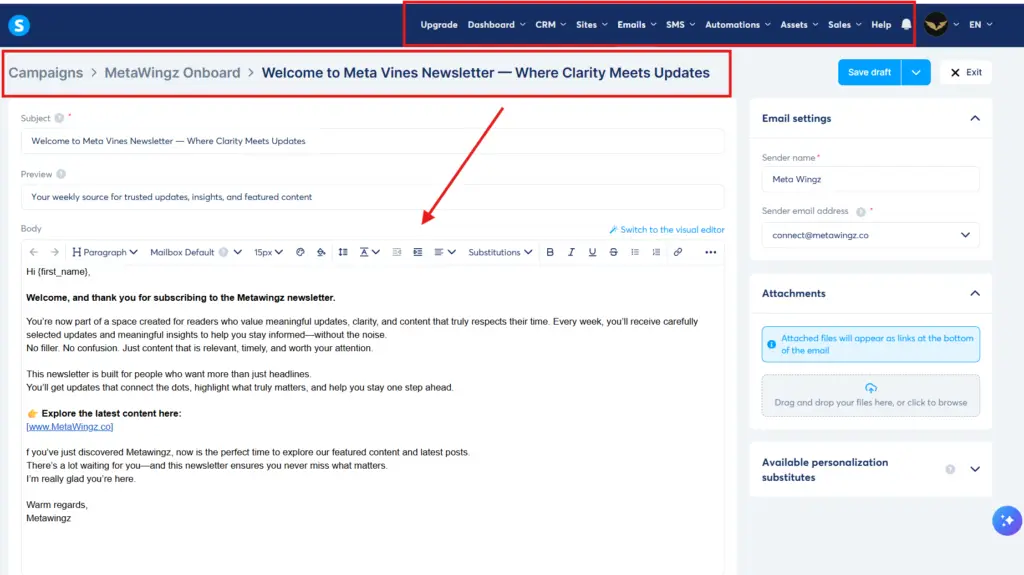
The email system is the most underrated part of the platform — and one of the reasons this Systeme.io review rates the product so highly on value for money. Most people expect a basic broadcast tool bolted onto a funnel builder. What they find is a full automation engine that competes directly with ConvertKit — a standalone tool that charges $39 a month for the same capability.
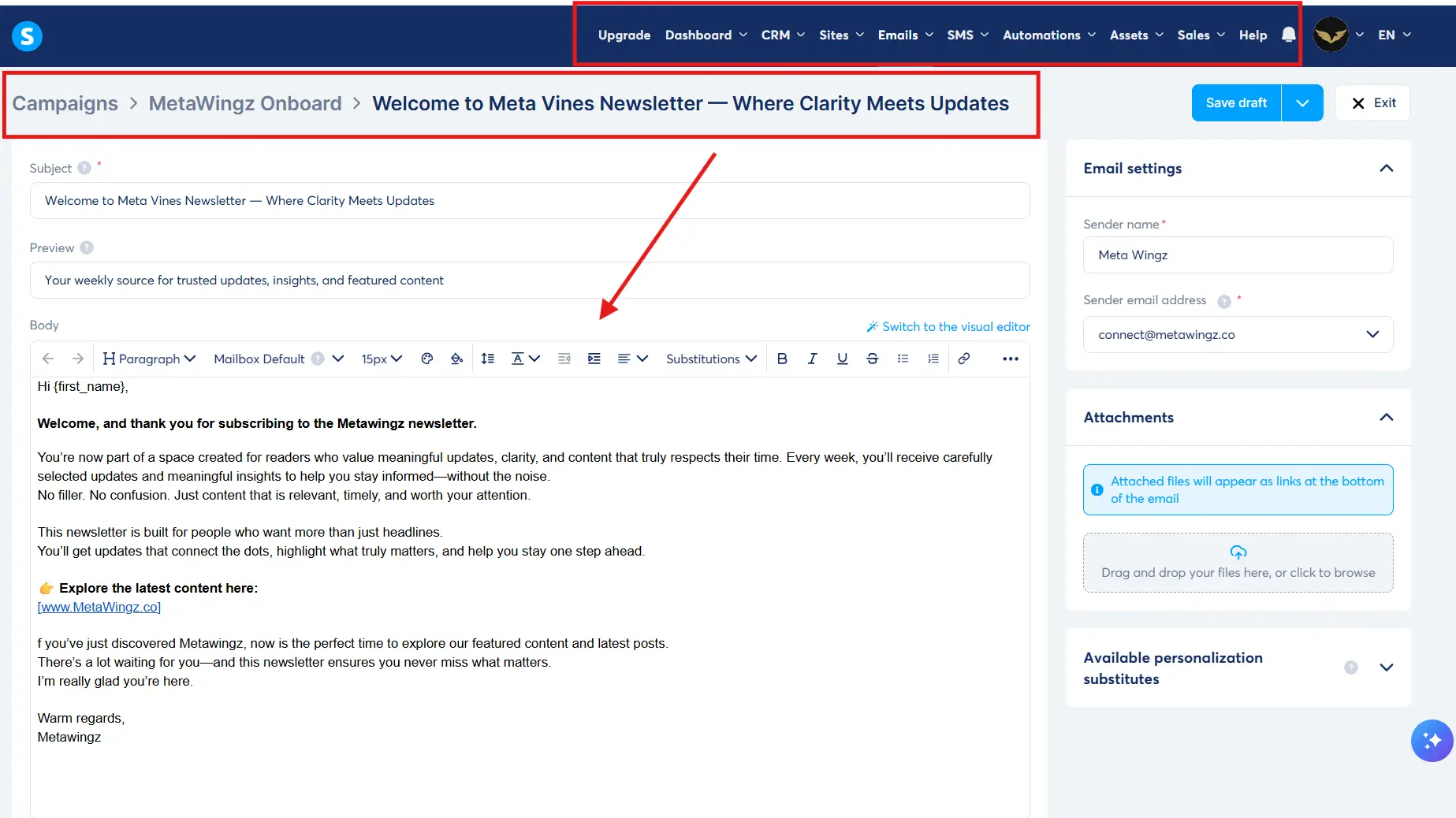
Broadcast emails, automated sequences, contact tagging, conditional automation rules, and list segmentation are all included. Every feature is available on the free plan. You can set up a multi-step welcome sequence, trigger automations based on subscriber behaviour, tag contacts by source, and segment your list for targeted campaigns — without paying anything.
The honest deliverability note: Systeme.io uses a shared sending IP across all plans below Unlimited. Thousands of accounts send through the same infrastructure. In practice, Users report open rates between 20 and 28%, which sits slightly below Mailchimp’s Ecommerce benchmark of 29.81% and its all-industry average of 35.63%. For lists under 10,000 subscribers this is not a significant problem. For high-volume senders above 50,000 emails per month, the lack of a dedicated IP option becomes a real consideration.
3. Online Course Builder
Systeme.io includes a fully functional course builder on every plan, including the free tier. This Systeme.io review takes this feature particularly seriously because it is Teachable charges $39/month for — included in Systeme.io at no extra cost.
Courses are structured as course → module → lesson. Lessons support video (uploaded or embedded), text, and downloadable files. Drip content is supported — you can schedule lessons to unlock over time rather than releasing everything at once. Lesson-completion gating is also available, so students must finish one lesson before the next unlocks.
The integration advantage: When a student buys your course through a Systeme.io sales funnel and pays via Stripe or PayPal, they are automatically enrolled and granted access. No Zapier, no manual step, no third-party connector. The sales-to-delivery pipeline is fully automated.
The honest limitation: Startup plan storage is 5GB total. A course with 10 HD lessons will approach or exceed this. The standard workaround is hosting video on unlisted YouTube or a free Vimeo account and embedding inside Systeme.io lessons. Works reliably. If you need everything hosted directly with no external dependencies, Kajabi ($179/month) offers unlimited video bandwidth at a higher price point.
4. Built-In Affiliate Programme Manager
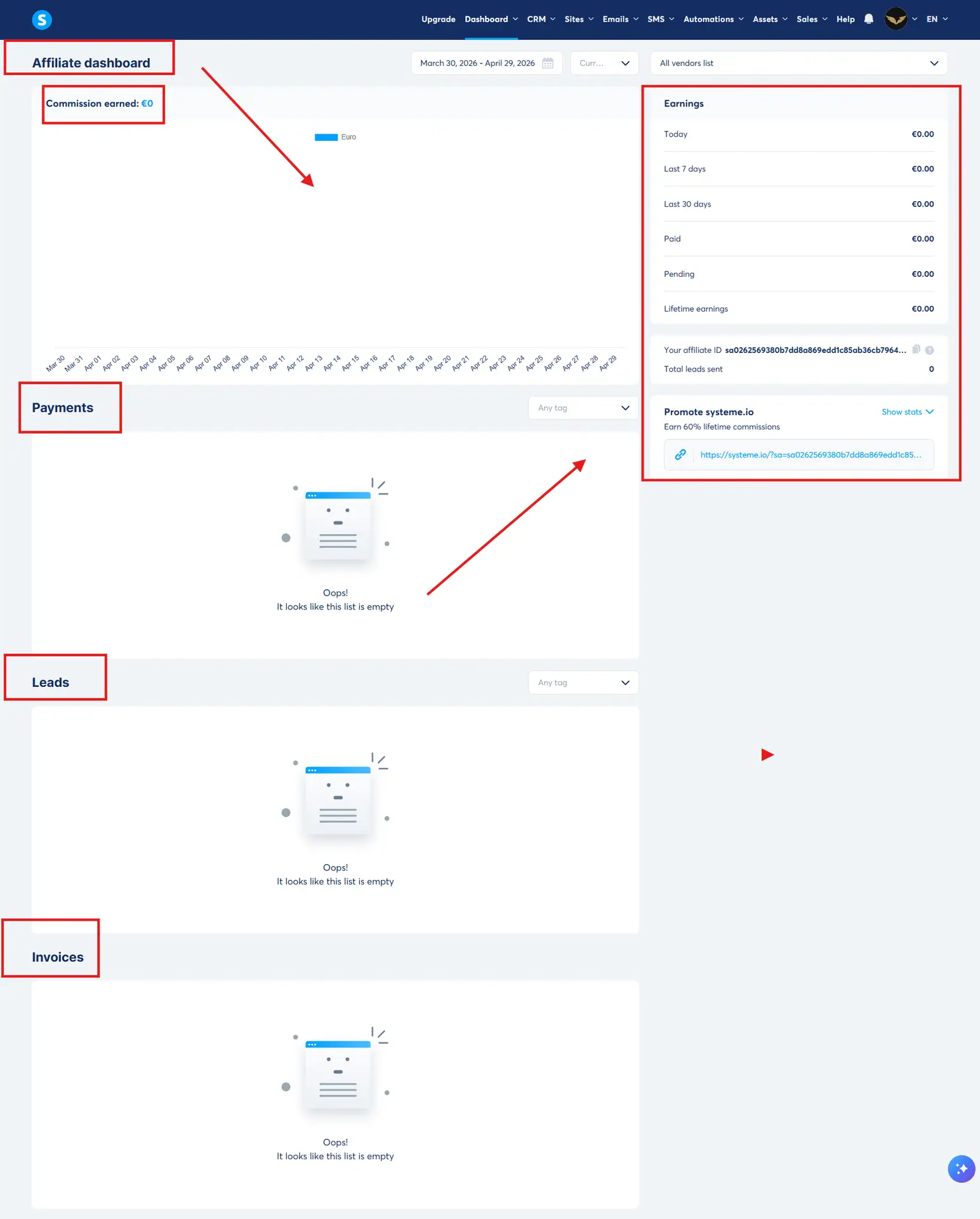
The most overlooked feature on the platform, and one this Systeme.io review weights heavily in the final verdict. Systeme.io includes a complete affiliate programme manager on every paid plan. You create unique affiliate tracking links for any product, set commission rates (flat fee or percentage), and monitor affiliates through a live dashboard showing clicks, conversions, and commissions in real time.
The tool includes a performance leaderboard, configurable payout settings, and support for both manual commission approval and automated PayPal payouts. For context: Tapfiliate charges $89/month for this same functionality. Systeme.io includes it at $17/month alongside the funnel builder, email system, and course builder. If you plan to launch a product with affiliate partners — even 10–20 people — this inclusion alone justifies the Startup plan. This Systeme.io review treats that one inclusion as one of the strongest value arguments on this list.
Limitation: Systeme.io’s affiliate manager supports single-level affiliate programmes. It does not support multi-tier commission structures where a referring affiliate earns from their sub-affiliates. For standard product launches this is not a concern. For MLM or network structures, a dedicated platform handles it better.
5. Website + Blog Builder
The final core feature in this Systeme.io review is the one most affiliate reviews skip honesty on. The page builder works well for marketing pages and landing pages. For SEO-driven content blogging, it has a real ceiling that you need to understand before building your content strategy on it.
What works: You can build a full marketing site with navigation, custom pages, and a connected custom domain. Basic SEO settings (meta title, meta description, page slug) are available per page. The drag-and-drop block editor is faster than WordPress for simple landing pages. Blog functionality is included on Startup and above — you can publish posts, add categories, and set SEO meta fields. This Systeme.io review flags the included blog as a genuine SEO asset, not just a marketing afterthought, for any Startup-plan user already paying for hosting elsewhere.
The SEO limitation — this is important: The Systeme.io blog is not a WordPress replacement for content SEO. There is no plugin architecture, no Rank Math or Yoast SEO equivalent, no granular schema control, no custom XML sitemap configuration. Independent tests consistently show Systeme.io-hosted content struggles to rank on Google against well-configured WordPress sites.Practical recommendation: If content marketing and Google organic traffic are core to your growth plan, run your blog on WordPress and use Systeme.io for funnels, email, courses and affiliates. The two platforms work alongside each other without conflict. Use each for what it does best.
Systeme.io Pricing 2026: Which Plan Do You Actually Need?
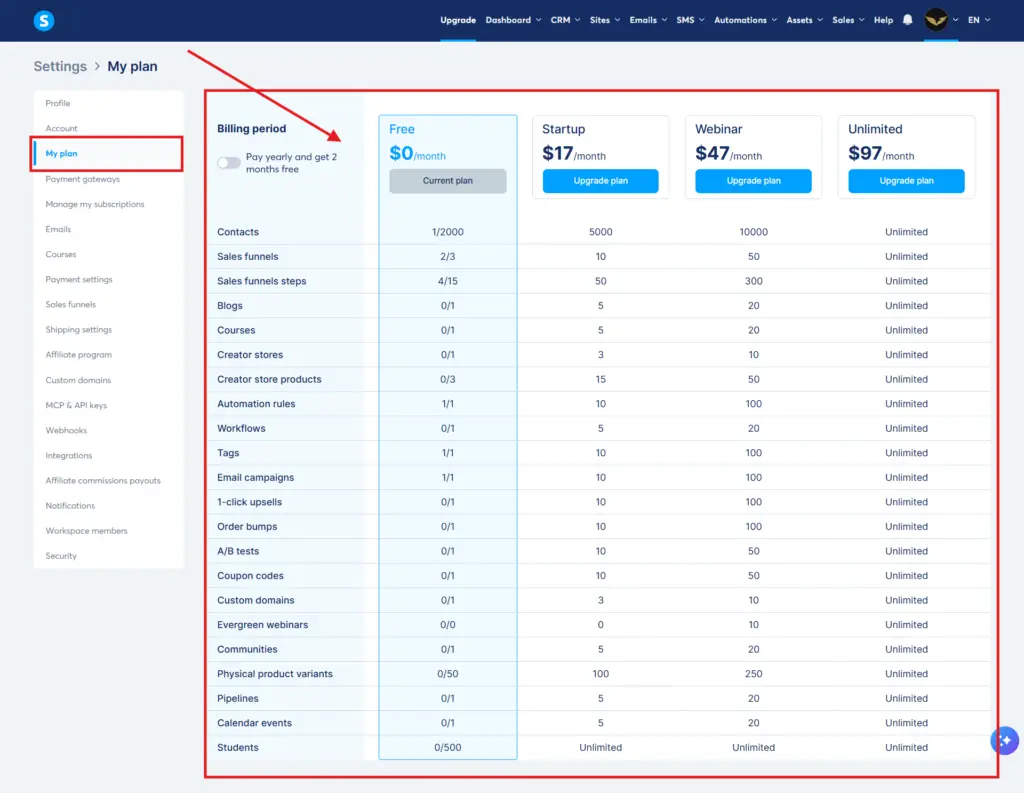
This part of the Systeme.io review gets the most questions on. Four plans. No hidden add-ons. No feature-gating designed to force you into an upgrade in your first week.
Plan
Price/month
Contacts
What it adds
Free
$0
2,000
3 funnels, unlimited emails, 1 course, 1 domain, no credit card, no expiry.
About the free plan — what is genuinely free and what is not, and why this Systeme.io review treats its permanence as a meaningful differentiator: The free tier is permanent, not a trial. It includes 2,000 contacts, 3 sales funnels, unlimited email sends, and 1 online course — no credit card, no expiry. The limits are real, but they sit at exactly the right points for a genuine beginner. You can build a complete funnel, collect leads, run email sequences, and sell a product on the free plan. When you hit 2,000 contacts or need more than 3 funnels, that is your signal to upgrade.
The upgrade from Free to Startup ($17) pays for itself the first time you make a single $17 sale on the platform. It is one of the clearest value decisions in SaaS, and the conclusion most Systeme.io review articles converge on once the numbers are put on paper.
The cost saving that makes Systeme.io compelling: At $17/month, Systeme.io replaces ClickFunnels at $97, ConvertKit at $39, Teachable at $39, and Tapfiliate at $89. That is a combined stack cost of $264/month reduced to $17/month — a saving of $247 every month, or $2,964 per year, from day one.
On discounts: annual billing is available at roughly 30% off. There is no coupon code that provides additional savings — any Systeme.io review claiming otherwise is publishing outdated or inaccurate info. A value-add note for global buyers: Stripe and PayPal on Systeme.io accept multi-currency billing (INR, PHP, BRL, etc.), so you can sell locally even though the platform bills in USD.
Four things that almost every Systeme.io review gets wrong, glosses over, or skips entirely.
Finding 1: The free plan is genuinely real — and that is unusual. Every other ‘free plan’ in this product category is a conversion trap: crippled just enough to push you into paying within the first week. Systeme.io’s free plan has limits placed at exactly the right points for a beginner. You can run a real revenue-generating business on the free tier for months without hitting an artificial paywall. That is not marketing copy — it is confirmed by thousands of user reports on Reddit, YouTube, and the platform’s own community forum. Most Systeme.io review articles skip this because it cuts against the usual upgrade-pressure narrative.
Finding 2: The blog is not for SEO publishers, and most reviews do not say this clearly. The Systeme.io blog looks fine on the surface. But search for pages built on it and you will find almost none ranking for competitive keywords. The platform was not built as an SEO engine — it was built as a conversion tool. Use it as such. Run your blog on WordPress. Any Systeme.io review that pretends the blog competes with WordPress is misleading its readers.
Finding 3: The email system is better than its reputation suggests. Because the shared-IP deliverability concern is widely discussed, many people assume Systeme.io email is poor across the board. The reality is more nuanced: for new lists being built organically with clean opt-in processes and engaged subscribers, users report 22–27% open rates — solidly within industry normal. The limitation only becomes material at 50,000+ monthly sends. If all you read is the first Systeme.io review that pops up on Google, you will miss that nuance entirely.
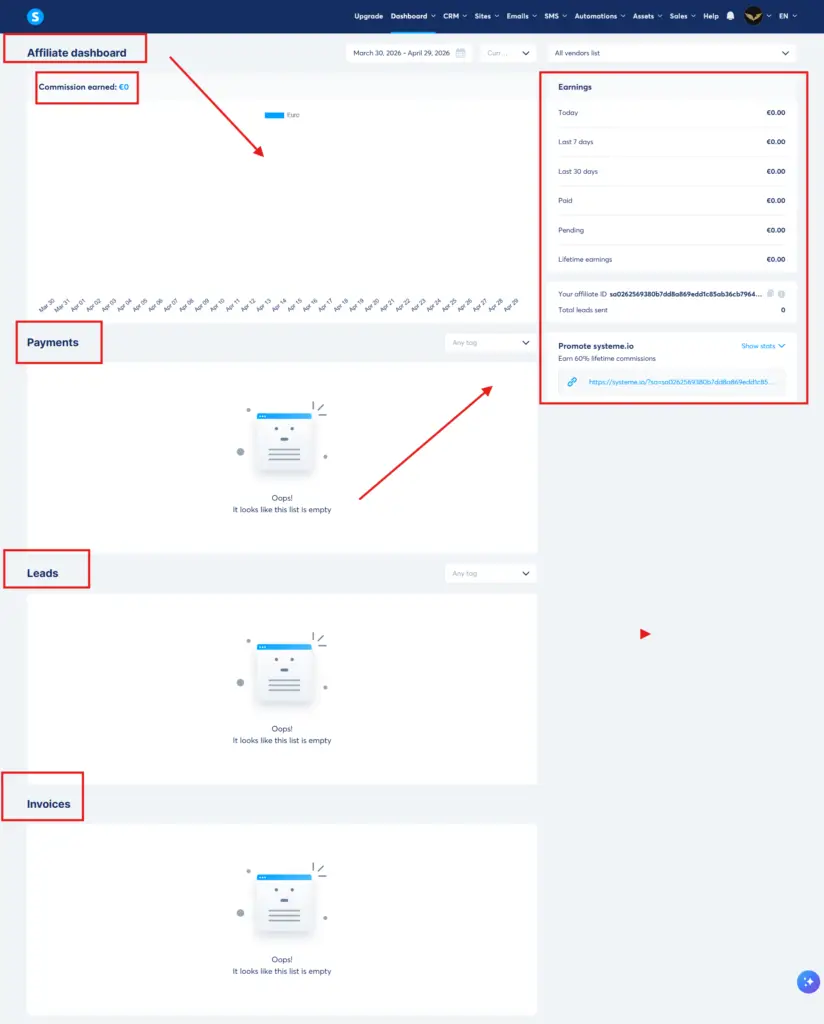
Finding 4: The affiliate programme terms are exceptional. 40% recurring with a lifetime cookie and no entry fee is not common in the SaaS tools space. Most programmes in this category pay 20–30% one-off, have 30–90 day cookies, and require minimum traffic thresholds to join. Systeme.io has none of these barriers. If you write about online business tools, this belongs in your affiliate portfolio.
This is the section most affiliate reviews skip — and the section this Systeme.io review puts front and centre. Recommending the wrong tool to a reader destroys trust faster than anything else. If any of the following describes your situation, here is what to use instead.
You send 50,000+ emails per month and revenue is tightly tied to open-rate performance. The shared IP infrastructure creates compounding losses at that volume. Consider ActiveCampaign, Klaviyo or Drip — all offer dedicated IP configurations.
Your entire growth model is SEO-driven blog content on a technically optimised WordPress site. Systeme.io’s blog will not compete at that level. Use WordPress for content, Systeme.io for conversion.
You need deep CRM integration. Salesforce, HubSpot, and Pipedrive do not have native Systeme.io connectors. You will need Zapier as a bridge, which adds monthly cost and a point of failure.
You run a complex affiliate network with multi-tier commission structures or enterprise compliance requirements. Impact or PartnerStack handle this better.
You have a large video-heavy course library with 30+ HD video lessons. Systeme.io’s storage limits require a workaround. Kajabi’s ($179/month) unlimited video bandwidth is more appropriate at that scale.
Systeme.io vs ClickFunnels vs Kajabi vs Kartra: Feature Comparison
Head-to-head on the things that actually drive the purchase decision — the core table every Systeme.io review should show before recommending a plan. All four competitor prices below were re-verified in April 2026.
Systeme.io Email Deliverability: What the Data Actually Shows
One of the most common questions in any Systeme.io review is whether the email deliverability is reliable enough to build a real business on. The answer requires some nuance.
Systeme.io’s email system uses shared sending infrastructure across all plans below Unlimited. Your emails go out through IP addresses used by thousands of other accounts. The reputation of that shared IP affects how Gmail and Outlook classify your mail.
The good news: Systeme.io actively monitors shared-infrastructure reputation. Users report open rates between 20 and 28%, which sits within the Statista SaaS email open-rate benchmark range. For a new list with a clean opt-in process, the shared IP is not a significant obstacle. This Systeme.io review weighs that 20–28% range against the shared-IP concern raised earlier and finds the gap smaller than the platform’s reputation suggests.
The limitation: at 50,000+ emails per month, the 3–5 percentage point gap between a shared and dedicated IP translates into a meaningful number of missed opens. At that scale, ActiveCampaign or Klaviyo are worth the extra cost.
The Real Cost Saving: Systeme.io vs the Stack It Replaces
Tool replaced
Monthly cost
What Systeme.io does instead
ClickFunnels
$97
Funnel builder — same core capability, at $0 on free plan.
If this Systeme.io review had to be reduced to three paragraphs, these would be them. What stands out about Systeme.io is its pricing philosophy. In a SaaS landscape where every competitor races toward higher prices and more aggressive feature-gating, Systeme.io has held a free plan that is genuinely functional and a $17 paid entry point that gives you capabilities others charge $179+ for. Whether that is a permanent strategy or a growth-phase tactic, right now it represents real value for real people.
My Honest Take on Systeme.io : The area where the platform’s reputation is unfairly negative: email deliverability. Because the shared-IP concern is widely discussed, many assume the email system is poor across the board. The reality is more nuanced. For a new list built with clean opt-ins and engaged subscribers, Systeme.io’s deliverability is adequate and the financial savings versus a standalone tool are substantial. The limitation only bites at scale — most users are not yet there.
The area where it is genuinely oversold: the blog. Every review says ‘it has a blog’ as though that is equivalent to WordPress. It is not, and repeating that equivalence does a disservice to anyone counting on organic search. The blog is a useful supplement. It is not a content marketing engine.
Should You Use Systeme.io in 2026?
The closing call of this Systeme.io review: Systeme.io is the strongest all-in-one business platform available at this price point. For solopreneurs, digital product sellers, course creators, and affiliates building a business, it replaces $200–$400/month of separate tools for $17/month, with a free plan that is genuinely functional and does not expire.
It is not for every business. High-volume email senders, SEO-driven content publishers, and companies that depend on advanced CRM integrations will hit real limits. The alternatives for those scenarios are covered above.
For the majority of people reading this Systeme.io review, the free plan is your zero-risk entry point. Start there. Build your first funnel. Run your first email sequence. See how far it takes you before spending anything. When you outgrow the free tier, $17/month for the Startup plan is one of the most straightforward upgrade decisions in online business tools.
Yes. This is the first question every Systeme.io review should answer directly. Systeme.io was founded in 2018 by Aurélien Amacker, serves over 300,000 users globally, and holds a 4.8 out of 5 rating on Trustpilot based on 700+ verified customer reviews. It has operated continuously for over six years.
Q2: Is Systeme.io actually free?
Yes, and this Systeme.io review has verified it from inside a live free account. Systeme.io offers a permanent free plan — not a time-limited trial — that includes 2,000 contacts, 3 sales funnels, unlimited email sends, and 1 online course. No credit card required. The limits are real but generous enough for most beginners to build and validate a complete business before upgrading.
Q3: Is Systeme.io better than ClickFunnels?
For most creators: yes. This Systeme.io review compared both tools feature-by-feature. Systeme.io wins on price ($17 vs $97), on the free plan (which ClickFunnels does not offer), on email marketing (included, a paid add-on for ClickFunnels), and on the built-in affiliate manager. ClickFunnels has a larger third-party template marketplace and more granular element-level A/B testing. For 90% of use cases, Systeme.io delivers the same outcome at less than one-fifth of the cost.
Q4: How much does Systeme.io cost in 2026?
Four plans: Free ($0/month), Startup ($17/month), Webinar ($47/month), and Unlimited ($97/month). Annual billing is available at roughly 30% off. No hidden fees or forced add-ons. This Systeme.io review verified the pricing in April 2026 from a live Systeme.io dashboard — always cross-check the official pricing page before signing up, because SaaS pricing can change.
Q5: Can you make money with Systeme.io’s affiliate programme?
Yes. Systeme.io pays 40% recurring commission with a lifetime cookie. Refer a customer on the Startup plan at $17/month and you earn $6.80/month for as long as they remain paying. These are among the strongest affiliate commission terms in any SaaS tool at this price category — a point worth calling out in any Systeme.io review.
Q6: Does Systeme.io replace Kajabi?
For most users, yes. Systeme.io covers courses, funnels, email, and affiliate management at $17/month versus Kajabi’s entry price of $179/month. Where Kajabi is genuinely superior is unlimited video hosting for large course libraries. For course creators with under 20 video lessons, Systeme.io handles the full workflow at a fraction of the cost.
Q7: What are Systeme.io’s main limitations?
Three real ones — the honest limitations this Systeme.io review keeps returning to: email deliverability uses shared IP infrastructure (adequate for most, but a ceiling at high send volumes) The blog builder is not a WordPress replacement for SEO content marketing; native integrations are limited — connecting Salesforce or HubSpot requires Zapier as a bridge.
Q8: Is Systeme.io worth it in 2026?
The final answer from this Systeme.io review: Yes for creators building or scaling a digital product business — course creators, coaches, affiliates, and solopreneurs replacing a multi-tool stack. No for high-volume email marketers who need dedicated IP infrastructure, or SEO-focused publishers who depend on WordPress’s full plugin ecosystem. For the right user, it is the clearest value proposition in the all-in-one platform category.
Sangeetha Vishnu is a Digital Product Reviewer and Affiliate Marketer with 4 years of experience exploring affiliate marketing, digital products, AI tools, and software across multiple platforms and affiliate programs.
I research, purchase, and test the products I review before sharing my honest experience. My goal is to help entrepreneurs, marketers, creators, and beginners understand what a product actually does, who it’s for, and whether it’s worth investing in.
I also share practical insights on affiliate marketing, AI tools, SEO, and online business. My guiding principle is simple: “Authority, Built On Clarity.” I believe honest reviews and transparent recommendations build lasting trust.